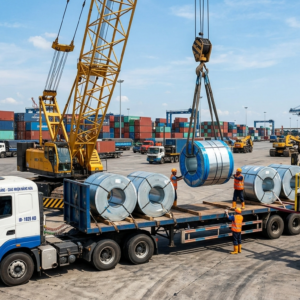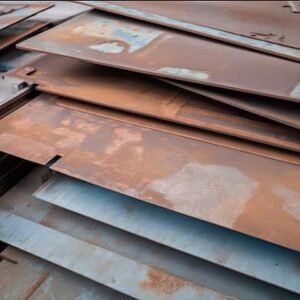


ZAM (Zn–Al–Mg) steel is becoming a noteworthy material solution in applications requiring high corrosion resistance. However, the effectiveness of the coating depends not only on the Zn–Al–Mg composition but also significantly on the chemical system used for surface treatment before and after plating .
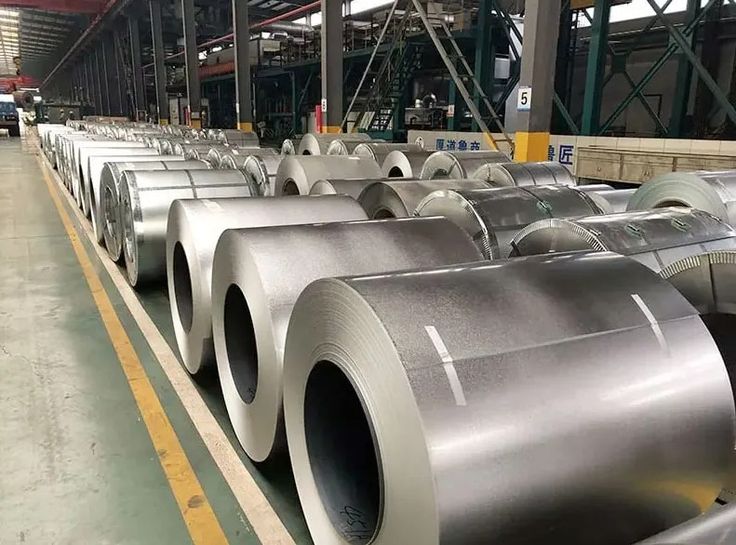
In particular, post-plating processing – especially passivation and thin organic coating (TOC) – is increasingly emphasized to control surface corrosion, maintain appearance, minimize fingerprints, and support machining processes. Research on Zn–Al–Mg surface treatment systems also shows that both Cr3+ passivation and non-chromium passivation can significantly improve protection compared to using only anti-corrosion oil.
Chemical System in the ZAM Steel Sheet Production Process
In a ZAM steel sheet manufacturing process, surface treatment chemicals can be divided into two main groups: pre-plating chemicals and post-plating chemicals .
Pre-Treatment Chemicals Before Plating
The goal of pretreatment is to bring the steel surface to a clean, uniform state suitable for the plating process. Common chemical groups include:
- Degreasing and cleaning chemicals: remove rolling oil, preservative oil, and organic matter.
- Alkaline cleaning chemicals: help remove grease and impurities from surfaces.
- Acid-activated cleaning/degreasing chemicals: remove oxides and inorganic contaminants, creating an activated surface.
- Surface treatment aids: control surface condition, wettability, and uniformity before plating.
Proper pretreatment lays the foundation for a uniform plating layer. However, after the Zn–Al–Mg layer is formed, the surface still needs further treatment to control oxidation and provide protection during subsequent processes .
Chemicals for Post-Plating Treatment
Passivation is the process of creating a transformation layer on the surface of the plating, which helps to limit direct interaction between the metal and the environment.
For ZAM , the two technological directions currently being used and developed strongly are:
- Chrome III passivation (Cr³ ⁺).
- Chrome-free passivation.
Studies on Zn–Al–Mg coatings show that Cr³⁺ passivation films have a structure containing chromium phosphate compounds and organic silica components; while Cr-free systems can utilize silane and water-based resins to create a protective network on the surface.
This trend is also consistent with the shift in the surface treatment industry from traditional Cr(VI) technology to Cr³⁺ , silane-based Cr-free and Cr-free TOC .
1. PrimeCoat® Z838 – Chrome III Passivation with TOC
PrimeCoat® Z838 is a Chrome III passivation solution, a ZAM-based phosphate/silane surface treatment , designed for multi-functional processing.
Depending on the process conditions and the amount of material to be processed, Z838 can:
- Passive mode based on Chrome III.
- Water-based Cr3+ surface treatment system.
- Fluoride-free.
- Meets RoHS requirements according to the technical documentation.
A notable feature of PrimeCoat® Z838-4P is its adjustability in coating quantity . Depending on the line requirements, the product can be used as a Chrome III passivation layer or as a thin TOC organic coating formed on the metal surface after plating, providing additional features such as:
- Anti-fingerprint,
- Reduce friction
- Support for shaping .
Thus, Z838 focuses not only on corrosion protection but also on machinability and surface quality after plating .
View product details here ⇓
2. PrimeCoat® Z908 VH – Chrome-free passivation with TOC
PrimeCoat® Z908 VH is a water-based passivation chemical, developed using Phosphate/Silane technology, in the direction of Non-Chrome passivation .
Z908 VH does not contain Cr(VI) or other forms of chromium, in line with the trend toward reducing chromium in surface treatment chemicals. The product is also geared towards meeting environmental requirements such as RoHS and REACH .
Notably, Z908 VH can switch functions depending on the application conditions. When applied at concentrations above 50%, the product can act as a Thin Organic Coating (TOC) .
This creates an integrated approach:
Passivation of Non-Chromium + TOC
Instead of focusing solely on one anti-corrosion function, the treatment system can extend its protection to multiple surface performance requirements such as:
- Minimize fingerprints.
- Maintain a clean and uniform appearance.
- Helps reduce friction.
- Improve machining capabilities .
View product details here ⇓
Passivation and TOC: Two functions in one processing system
The development of ZAM treatment chemicals is shifting from single-function products to multi-function treatment systems .
Corrosion resistance → Appearance → Antifingerprint → Formability → Storage stability → Compatibility with subsequent coatings.
The Z838 and Z908 VH clearly demonstrate this trend, as they can be adapted to perform either Passivation or TOC functions depending on application requirements.
Current trends in ZAM steel sheet treatment chemicals.
Along with increasing demands for performance and environmental sustainability, chemical technology for ZAM is focusing on four main areas.
Chrome III or Chromium-free
Reducing and eliminating Cr(VI), moving towards Cr3+ / Cr-free systems based on silane, phosphate, resin, or other conversion technologies. This is currently a clear direction of development in ZAM surface treatment.
Thin film processing
Optimize the chemical dosage and film thickness while still ensuring the necessary protective capabilities.
Multifunctional
A single chemical system can simultaneously perform multiple tasks: Passivation + TOC + Antifinger + shaping support .
Application-specific optimization
Not all ZAM products require the same treatment. Requirements for formwork, high-end appearance products, subsequent coating products, or products requiring surface electrical conductivity can vary. Even ZAM manufacturers develop various treatment systems to meet specific requirements such as corrosion resistance, machinability, lubrication, and anti-fingerprint properties.
Frequently Asked Questions (FAQ)
1. What is ZAM steel?
ZAM steel is steel coated with a zinc -aluminum-magnesium (Zn-Al-Mg) alloy to enhance the protection of the underlying steel against environmental impacts. Compared to traditional galvanizing, the ZAM coating has a unique surface protection mechanism thanks to its alloy composition and the stable corrosion product layer formed during use.
2. Why is it necessary to clean the steel before ZAM coating?
The surface of steel before plating often contains rolling oil, dirt, oxides, or other contaminants. If not effectively removed, these impurities can affect the contact between the substrate steel and the plating layer, thereby impacting the uniformity and quality of the coating.
Therefore, cleaning and surface preparation is one of the crucial steps before steel undergoes the plating process.
3. Is surface treatment of steel necessary before immersing it in the ZAM coating bath?
Yes. The steel surface needs to be in a suitable condition for the plating process to be stable. Depending on the production line technology, the preparation process may include cleaning, deoxidation, activation, or other intermediate treatment steps.
The goal is to minimize impurities and oxides remaining on the substrate steel, while facilitating the formation of the ZAM coating.
4. Does the ZAM post-plating chemical help to reduce white rust?
Yes, it is possible. Properly designed post-plating treatment systems can help limit surface corrosion reactions and the formation of white corrosion products under suitable conditions.
However, effectiveness depends not only on the chemicals but also on surface conditions, humidity, storage and packaging methods, and storage time.
Value Added from DK-CHEMICLAS
In addition to supplying AD CHEMICALS surface treatment chemicals , DK CHEMICALS also supports customers in optimizing production processes and improving line operational efficiency.
Key features include:
In-depth technical consulting.
Optimize production costs.
Improve product quality
Reduce the error rate in production.
Increase competitiveness in the market.
Support the deployment of environmentally friendly technologies.
DK CHEMICALS ‘team of experts has practical experience in continuous production lines, helping customers choose the most suitable solution for each type of material and specific technical requirement. Contact us for expert advice!
DK Chemical Company Limited
Address: 50 Street No. 12, Cityland Park Hills Residential Area, Go Vap Ward, Ho Chi Minh City
Hotline: 0909678599
Email: de@dk-chemicals.vn