

What is Passivation for Aluminum? Chromium VI-Free Corrosion Protection Solution with PreCoat A32
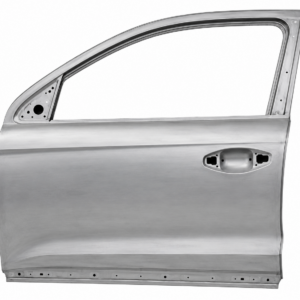
Aluminum is widely used in construction, automotive, electronics, and aerospace industries due to its lightweight and natural corrosion resistance. However, in marine, high-humidity, or industrial environments, aluminum surfaces still require additional protection through specialized surface treatment technologies. One of the most effective solutions currently available is passivation of aluminum using Chromium(III) technology.
This is why passivation technology for aluminum is widely used to increase corrosion resistance, improve paint adhesion, and extend product lifespan.
Today, with the trend toward phasing out Chromium(VI), Chromium VI-free aluminum passivation solutions are becoming the preferred choice for many businesses worldwide.
What is Aluminum Passivation?
Aluminum passivation is the process of creating an extremely thin chemically modified layer on the surface of aluminum to protect the metal from corrosion and oxidation.
Unlike paints or organic coatings, passivation layers bond directly to the metal surface and cause virtually no change in the dimensions or shape of the part.
This metabolic layer helps:
- Increased corrosion resistance.
- Improve surface durability.
- Improves the adhesion of paint and glue.
- Maintaining electrical conductivity is essential for various engineering applications.
- Increase product lifespan in harsh environments.
Why is passivation necessary for aluminum?
Although aluminum has the ability to naturally form a protective oxide layer, under many real-world operating conditions, this natural protection can degrade over time. This is especially true for:
- Outdoor architectural aluminum.
- Aluminum in the marine environment.
- Automotive parts.
- Electronic devices.
- Aerospace details.
The application of passivation technology enhances protection and ensures a longer product lifespan.
Benefits of Passivation for Aluminum
Increased Corrosion Resistance
The transformation layer acts as a protective barrier, helping to reduce the impact of moisture, salt, and corrosive agents from the environment.
Increase Paint Adhesion
For powder coating or liquid coating applications, passivation helps create an ideal adhesion base for the coating.
Complies with RoHS and REACH Standards
New technologies that do not contain Chromium(VI) help businesses meet environmental and sustainable development requirements.
Maintain Electrical Conductivity
Unlike many other coatings, the passivation layer can still maintain the electrical conductivity of the aluminum surface.
Passivation Process for Aluminum
Depending on the technical requirements and product type, the process may vary. However, a common process usually includes:
Step 1: Degreasing
Remove grease, dirt, and other impurities generated during the machining process.
See more Oil Remover products: Here
Step 2: Rinse with Water
Completely remove any remaining cleaning chemicals.
Step 3: Etching or Surface Activation
This facilitates the uniform formation of the transformation layer across the entire surface.
See more Etching products: Here
Step 4: Rinse with Water
Clean the surface before proceeding with the passivation process.
Step 5: Passivation
Create a protective chemical coating using specialized chemicals.
Step 6: Dry or Apply a Coating
The product can be used directly or further processed in the final painting stage.
Comparison of Cr(VI) and Cr(III) Technologies
For many years, chromium(VI)-containing chromate systems were widely used due to their high corrosion resistance. However, the current trend is shifting towards chromium(III) or chrome-free technologies.
| Criteria | Chromium(VI) | Chromium(III) |
|---|---|---|
| Corrosion resistance | Very high | Very high |
| Paint adhesion | High | High |
| Compliant with RoHS | Are not | Have |
| Comply with REACH | Limit | Have |
| Environmental impact | High | Lower |
| Usage trends | Decreasing | A sharp increase |
Therefore, many manufacturers are switching to passivation solutions for Cr(III)-containing aluminum to meet modern technical and environmental requirements.
PreCoat A32 – High-Performance Chromium III Passivation Solution
PreCoat A32 is a passivation chemical line for aluminum based on Chromium(III) technology, developed to replace traditional Chromium(VI) systems in a wide range of industrial applications.
The product creates a transparent, uniform transformation layer that effectively protects aluminum surfaces under a variety of environmental conditions.
Advantages of aluminum passivation PreCoat A32
- Does not contain Chromium(VI).
- High corrosion resistance.
- Increases paint adhesion.
- Maintain surface electrical conductivity.
- Compatible with existing processing lines.
- Reduce environmental impact.
- Support in meeting international standards.
View product details for Precoat A32 here :
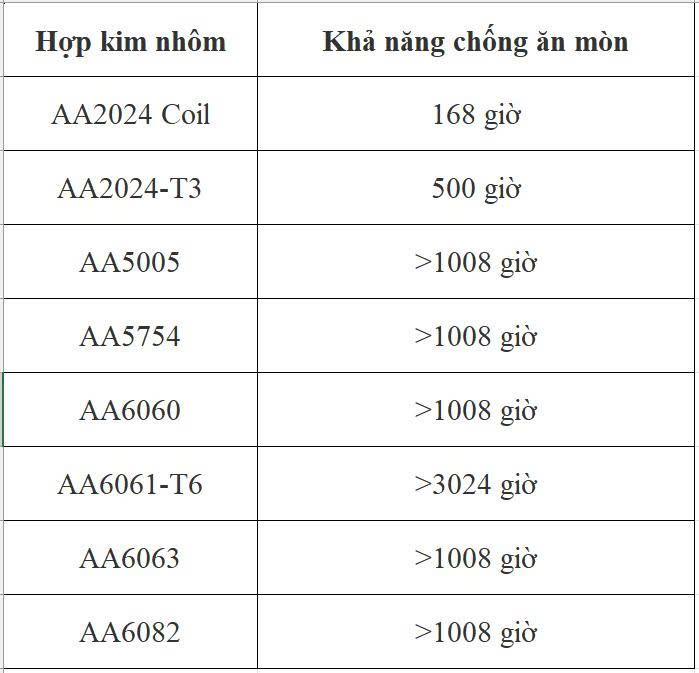
Corrosion Resistance of PreCoat A32
The conversion layer formed by PreCoat A32 helps protect the aluminum surface under a variety of operating conditions.
The product has been evaluated through standard corrosion tests such as:
- ASTM B117
- Qualicoat
- GSB
- MIL-DTL-81706B
- MIL-DTL-5541
Test results show superior corrosion resistance and suitability for a wide range of industrial applications requiring high durability.
Applications of Aluminum PreCoat A32 Passivation Chemical
Automotive Industry
Protect aluminum components from corrosive environments and extend their lifespan.
Aerospace Industry
Meets stringent technical requirements for corrosion resistance and surface stability.
Electronics Industry
Maintain electrical conductivity while protecting the metal surface.
Construction and Architecture Industry
Applications include aluminum profiles, curtain walls, and outdoor structures.
Industrial Engineering
Protect aluminum components and equipment in harsh manufacturing environments.
Why are businesses switching to chromium-free VI technology?
Modern manufacturing trends are moving towards:
- Reduce emissions of hazardous chemicals.
- Comply with international environmental standards.
- Improve workplace safety.
- Simplify waste management procedures.
- Increase sustainability in production.
Chromium III passivation technology such as PreCoat A32 effectively meets these requirements while maintaining high corrosion resistance.
How are aluminum passivation and anodizing different?
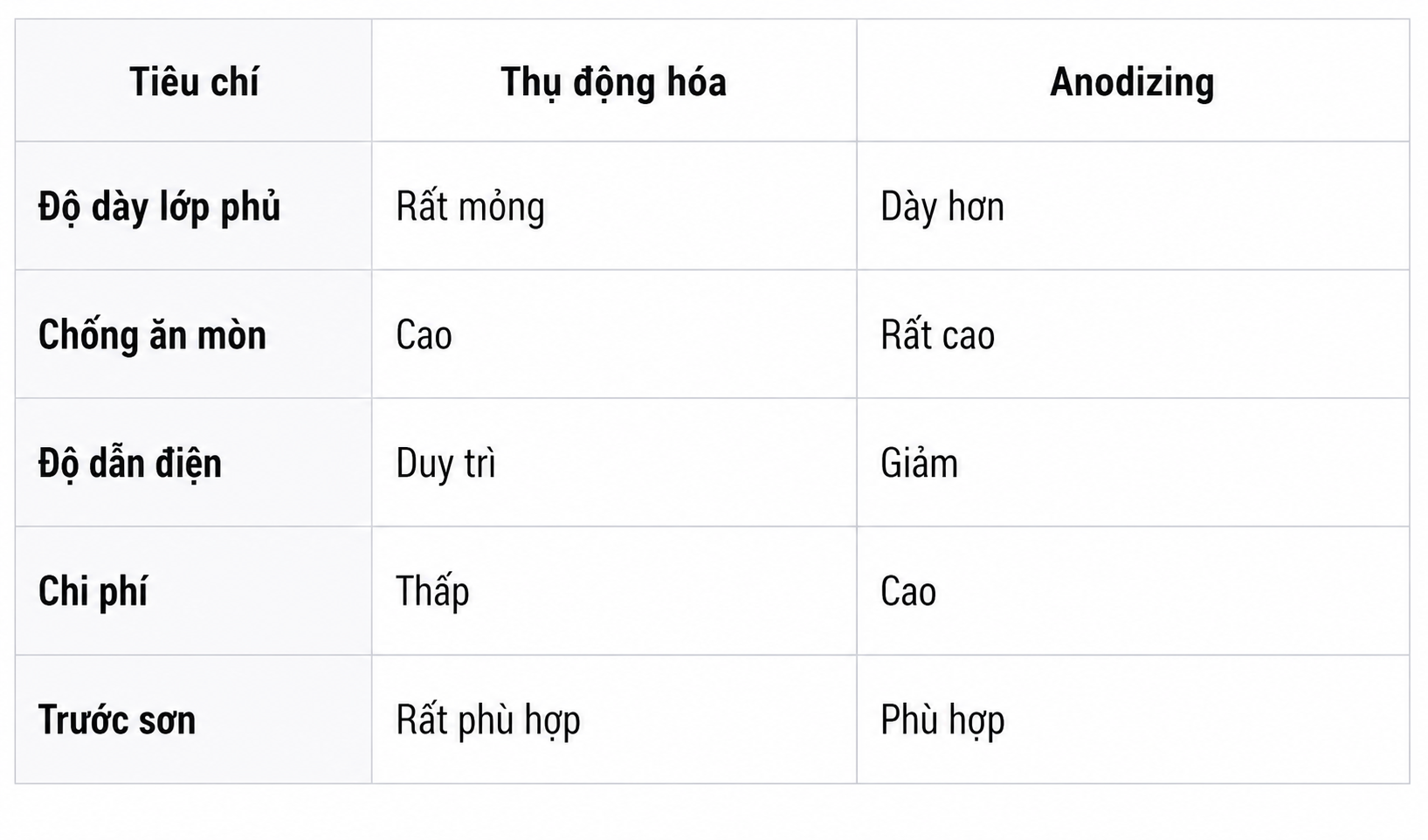
Comparison table of aluminum passivation and anodizing.
Frequently Asked Questions
What is aluminum passivation?
It is a process of creating a protective film that increases the corrosion resistance of aluminum surfaces.
Can aluminum passivation replace Chromium VI?
Yes. Silane and Chromium III technologies are now popular alternatives to Chromium VI.
Can passivated aluminum be powder coated?
Yes. The passivation layer helps increase the adhesion of the paint layer.
Does passivating aluminum help protect against marine corrosion?
Yes. The appropriate process significantly improves corrosion resistance in humid and saltwater environments.
Learn More
1. Passivation Solutions for Aluminum
PreCoat A32 is a passivation chemical line for aluminum based on Chromium(III) technology, developed to replace traditional Chromium(VI) systems in a wide range of industrial applications.
2. Aluminum Anodizing
Aluminum anodizing is an electrochemical process that converts the surface layer of aluminum into a highly durable aluminum oxide (Al₂O₃) layer that adheres firmly to the metal substrate. Unlike surface coatings or plating, the anodized layer is formed directly from the substrate material, so it does not peel, crack, or delaminate during use.
DK-Chemicals: Metal surface pretreatment solutions for industry
DK-Chemicals provides chemical surface treatment solutions for metals serving the aluminum, galvanized sheet, color-coated steel, coil-coating, and related industrial applications.
With a focus on providing advanced, environmentally friendly technologies that meet modern production requirements, DK-Chemicals partners with customers in selecting suitable pre-treatment solutions, optimizing surface quality, and enhancing product durability after coating.
Contact DK Chemicals’ technical team today for detailed advice .
DK Chemical Company Limited
Address: 50 Street No. 12, Cityland Park Hills Residential Area, Go Vap Ward, Ho Chi Minh City
Hotline: 0909678599
Email: de@dk-chemicals.vn