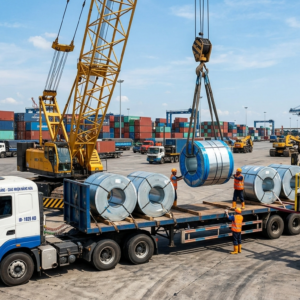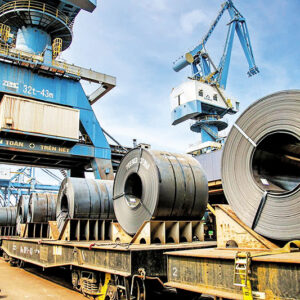


The Vietnamese steel industry is entering a crucial transformation phase. Greening production processes is no longer just a goodwill choice, but a strategic imperative that determines the industry’s survival and sustainable development on the global trade map.
- Green Transition in Metal Surface Treatment: Commercial Advantages from the Turning Point of Replacing Cr6+ with Cr3+B
- Highlights of the Steel Industry in 2025 and Growth Drivers for 2026
- Vietnam’s Steel Industry in 2026: Facing Strategic “Pinches” and the Inevitable Transformation Roadmap
Greening Orientation for the Steel Industry
From 2015 to the present, Vietnam’s steel industry has made breakthrough strides, rising to become the world’s 13th largest producer of crude steel and leading the ASEAN region in both production and consumption of finished steel products.
Globally, the steel industry accounts for approximately 8% of total CO2 emissions.
Pliers from Carbon Mechanisms
Businesses are facing pressure to transform from both sides: export markets and domestic policies.
- The drag from CBAM: The Carbon Border Adjustment Mechanism (CBAM), initiated by the European Union (EU), began its pilot phase on October 1, 2023, and is expected to be fully implemented by 2026. Steel is the most heavily impacted commodity, accounting for 56% of the value of goods subject to CBAM regulation. Currently, the emission intensity of Vietnamese steel is 1.36 tCO2/ton, 24% higher than the EU’s 1.1 tCO2/ton. Preliminary estimates indicate that CBAM costs could account for 15-20% of the cost of exported steel products. Without improvement measures, Vietnamese steel will lose its competitive advantage and even market share in the EU.
- Domestic carbon market: From 2025, Vietnam will pilot a carbon market, with steel being one of three key sectors, along with thermal power and cement. Businesses will be required to comply with emission limits, and if they exceed them, they will have to incur additional costs to purchase carbon credits on the market.
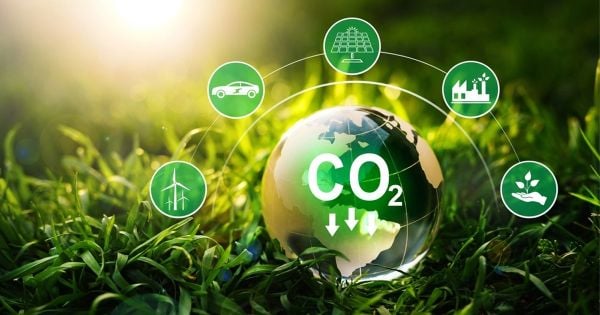 Obstacles on the Journey to “Decarbonization”
Despite recognizing the urgent need for green transformation, Vietnam’s steel industry is still facing a series of challenges.
- Enormous investment costs: Replacing blast furnace complexes with direct reduction iron using hydrogen (DRI) or carbon capture systems (CCUS) requires billions of dollars in capital. This is an insurmountable challenge for many small and medium-sized enterprises.
- Lock-in effect: The strong attachment to traditional blast furnace technology makes abandoning invested assets to switch to a new technological path extremely difficult, both technically and economically.
- The MRV system gap: The majority of Vietnamese businesses have not yet established a measurement, reporting, and verification (MRV) system that meets international standards. This leads to the use of default European values, which often overestimate actual emissions, putting exporters at a significant disadvantage.
- Human resource shortage: The industry is facing a severe shortage of highly skilled engineers and workers capable of operating advanced green steel production technologies.
Technology Roadmap and Solutions for Shaping the Future
To alleviate pressure and move towards the goal of net zero emissions by 2050, the steel industry needs a specific roadmap, divided into three phases:
- Phase 1 (Up to 2030 – Optimization): Prioritize low-cost solutions that deliver quick results. Key activities include implementing the Minimum Energy Performance Standards (MEPS) and applying waste heat and gas recovery technologies for power generation.
- Phase 2 (2030-2040 – Transition): Pilot implementation of carbon capture and storage (CCUS) technology at large integrated complexes. Simultaneously, encourage new investment in modern electric arc furnace (EAF) technology using renewable energy and promote research and application of hydrogen.
- Phase 3 (2040-2050 – Breakthrough): Widespread commercialization of direct reduction iron production technology using green hydrogen (DRI-H2) and moving towards the complete replacement of end-of-life blast furnaces.
Learn More
1. Chemicals for the Coiled Steel Industry .
2. Pre-treatment Chemicals
3. Chemicals for Hot-Dip Galvanizing (HDG)
4. Specialized Information
| NEW ARTICLE |
DK-Chemicals: Metal surface pretreatment solutions for industry
DK-Chemicals provides chemical surface treatment solutions for metals serving the aluminum, galvanized sheet, color-coated steel, coil-coating, and related industrial applications.
With a focus on providing advanced, environmentally friendly technologies that meet modern production requirements, DK-Chemicals partners with customers in selecting suitable pre-treatment solutions, optimizing surface quality, and enhancing product durability after coating.
Contact DK Chemicals’ technical team today for detailed advice .
DK Chemical Company Limited
Address: 50 Street No. 12, Cityland Park Hills Residential Area, Go Vap Ward, Ho Chi Minh City
Hotline: 0909678599
Email: de@dk-chemicals.vn