

The domestic construction steel market entered June 2026 with less positive signals when the downward trend in prices no longer took place locally but spread nationwide. After a period of weakness lasting from the second half of May, low consumption pressure forced many manufacturing enterprises to adjust selling prices, while purchasing power from the civil sector – an important driver of the market – has not yet shown clear signs of recovery.
Steel prices simultaneously adjusted in both regions
The first week of June recorded a notable change when the Southern region opened the price reduction with an adjustment of about 300 VND/kg. Not long after, factories in the North also made a similar move, bringing the price of construction steel down simultaneously nationwide.
This development clearly reflects the pressure from weakening consumer demand, high inventory in the distribution system and the psychology of waiting for falling prices to continue to cover the market. The large-scale decline in steel prices shows that the market has passed the adjustment expectation period to move to the actual adjustment process.
In the Southern region, after the latest price reduction, the popular construction steel coil ranges from 14.9 to 15.9 million VND/ton; CB300 rebar at 14.7 – 15.7 million VND/ton; while CB400 and CB500 rebar are traded around 15.0 – 15.9 million VND/ton.
Prices fell but trading was still quiet
Usually, a decline in the price will create an impetus to promote buying activity. However, the current reality shows the opposite. Although the price level has become more attractive, the volume of transactions in the market is still low and mainly serves actual demand.
Many dealers continue to maintain a cautious import policy, only taking goods according to pre-orders instead of hoarding as in previous periods. The reason comes from concerns that steel prices may continue to decline in the near future, causing inventory risks to increase.
This shows that the biggest difficulty of the current market does not lie in the selling price factor but comes from the decline in actual demand, especially civil construction demand. As individual housing projects and civil construction activities have not yet recovered, the steel consumption capacity of the distribution system continues to be limited.
Steel output drops sharply after peak period
Production data for May 2026 shows that a downward trend has formed before the market enters June. According to statistics from 10 large steel mills, construction steel output in May reached about 721.5 thousand tons, down more than 21% compared to the previous month.
Compared to the peak of March 2026, production has decreased by nearly 36%. The average daily output in May was only about 23.3 thousand tons, significantly lower than the 30.7 thousand tons/day in April and 36.1 thousand tons/day in March.
These figures show that manufacturers are actively adjusting their operating plans to balance supply and demand and reduce inventory pressure in the context that the consumption market has not shown signs of improvement.
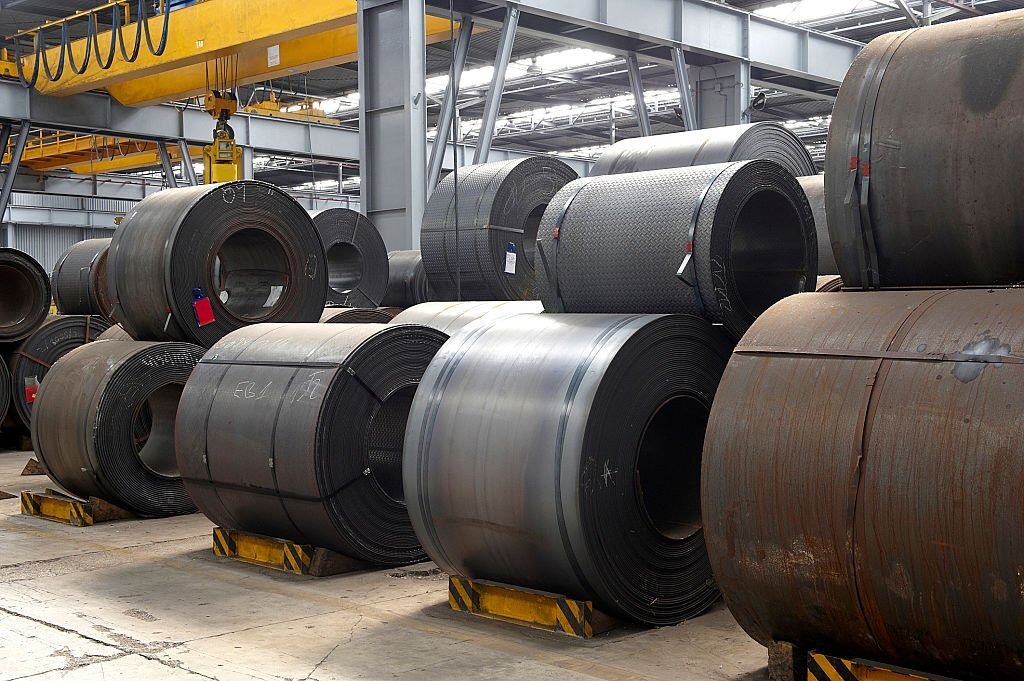
The domestic construction steel market entered June 2026 with less positive signals when the downward trend in prices no longer took place locally but spread nationwide
Inventories and market sentiment continue to put pressure on
One of the factors that is strongly affecting the market is the relatively large inventory at dealers and distributors. After the previous period of importing goods in the high price area, many units have not yet released inventory due to the rapid decline in purchasing power from the end of May.
Besides, the psychology of waiting for prices to continue to adjust is making purchasing decisions more cautious. Commercial enterprises prioritize preserving cash flow, limiting inventory risks instead of expanding imports.
Although many factories have implemented programs to increase discounts, support trade and encourage agents to import goods, the effect of stimulating demand is still quite limited when the final demand from the market has not really recovered.
Scrap prices began to cool down with the decline of steel
The downward trend of construction steel prices is also creating a spillover impact on the input material market. In the past week, the purchase price of domestic scrap has appeared downward adjustments in many areas.
Some factories in the South decreased by about 200 VND/kg at the beginning of the week and continued to decrease by about 100 VND/kg at the end of the week. Currently, the price of popular domestic scrap ranges from 6,000 to 9,500 VND/kg depending on the type and quality.
In the import market, scrap from Japan, the US and other international sources also began to appear a cooling trend. However, the purchasing power from Vietnamese enterprises is still quite weak because the demand for finished steel products has not recovered and many factories have ensured enough raw materials for short-term production needs.
The market continues to be cautious in the short term
Experts believe that the construction steel market in the coming time will still be under pressure from three main factors, including weak civil demand, high distribution inventory, and the psychology of waiting for prices to fall will continue to last.
In this context, factories are likely to continue to combine price adjustments, increased trade support and output control to reduce inventory pressure. However, the effectiveness of these measures will significantly depend on the resilience of the civil construction market as well as the progress of construction projects in the coming time.
When output has not improved, the entire steel supply chain is likely to remain defensive, focusing on controlling cash flow and price risk instead of expanding large-scale buying and selling activities.
See some chemicals for the steel industry here: https://dk-chemicals.vn/
See some of our other products here: https://dk-metalsurfacetreatment.com/san-pham-cong-ty-tnhh-hoa-chat-d-k/