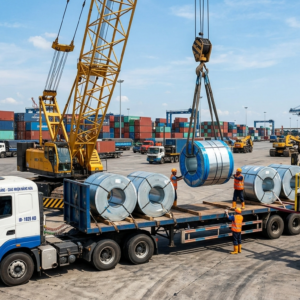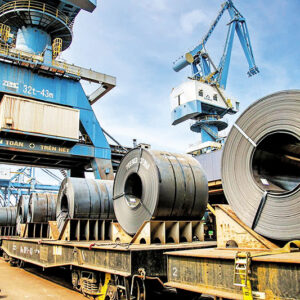


In manufacturing industries such as mechanical, automotive, household appliances, steel structures or coil coating, the quality of the paint not only depends on the type of paint or spray painting technology but is also directly affected by the pretreatment of the surface.
In fact, many businesses invest in modern paint systems, use high-quality paints or powders, but still encounter errors such as:
- The paint peels off after only a short period of use.
- Rust appears under the paint.
- The coating is uneven, easy to blister.
- Unsatisfactory adhesion after bending, stamping or machining.
The most common cause is not the paint, but the metal surface that has not been properly treated before painting. This is the stage that determines the ability to bond between the coating and the metal substrate, and directly affects the corrosion resistance and life of the product.
In this article, let’s find out what surface pretreatment is, why it is considered the “foundation” of the entire industrial coating system and the standard metal surface treatment process today.
What is Surface Pretreatment?
Surface pretreatment is a set of mechanical and chemical steps to prepare a metal surface before taking the next steps such as coating, electroplating, metabolic coating or gluing.
The objectives of this process include:
- Completely removes grease, dirt, and impurities.
- Remove the oxide and rust layer from the surface.
- Creating a chemical metabolic layer helps increase adhesion.
- Enhanced corrosion resistance.
- Uniform surface quality before painting.
It can be imagined that if the paint is a “house”, the surface pretreatment is the foundation. A substandard foundation will cause the entire paint system to deteriorate quickly, no matter how high the quality of paint used.
According to experience in the metal surface treatment industry, the pretreatment stage can determine about 70% of the quality of the finish, because this is the step that facilitates the coating to bond sustainably with the metal substrate.
Why does surface pretreatment determine adhesion and paint life?
1. The paint does not adhere directly to the metal
Many people think that the paint adheres directly to steel or aluminum. In fact, the adhesion of paint depends on many factors such as:
- Cleanliness of the surface.
- Micro roughness.
- Chemical metabolism layer (Phosphate, Zirconium, Nano Ceramic…).
If the surface remains:
- Machining Oils
- Fingerprint
- Metal Oxides
- Dirt
- Solder Residue
the paint only adheres to the impurity layer instead of directly adhering to the metal. When the impurity layer peels off, the paint will also peel off.
2. Increased adhesion between paint and metal
After being properly processed, the metal surface will form a chemical metabolic layer.
This layer has the effect of:
- increased contact area between metal and paint;
- creating sustainable chemical bonds;
- improve impact resistance;
- Limit peeling when bending or stamping.
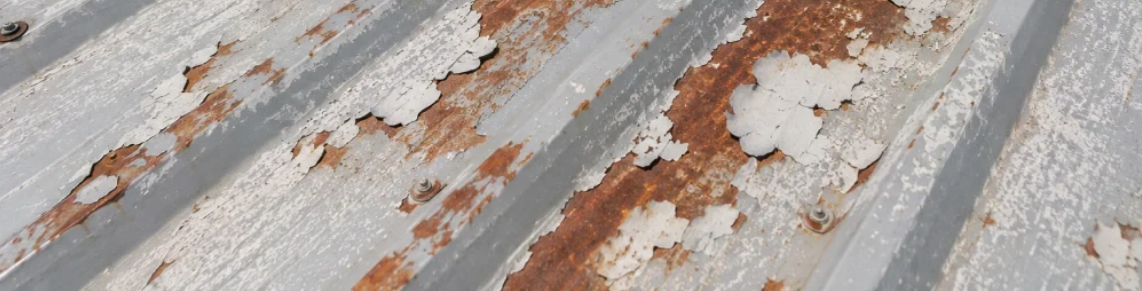
For products that have to undergo a forming process after painting such as corrugated iron, automotive components, or household electrical appliances, this is a particularly important factor.
3. Prevents corrosion right underneath the paint
One of the reasons why the paint peels off is not due to external influences but corrosion under the paint film.
When moisture or salt enters areas with impurities or untreated surfaces, the corrosion process starts in the metal substrate and spreads.
As a result:
- Blistered paint.
- Peeling off in patches.
- Rust appears at the cutting edge.
- Corrosion at the weld.
- Reduce product life.
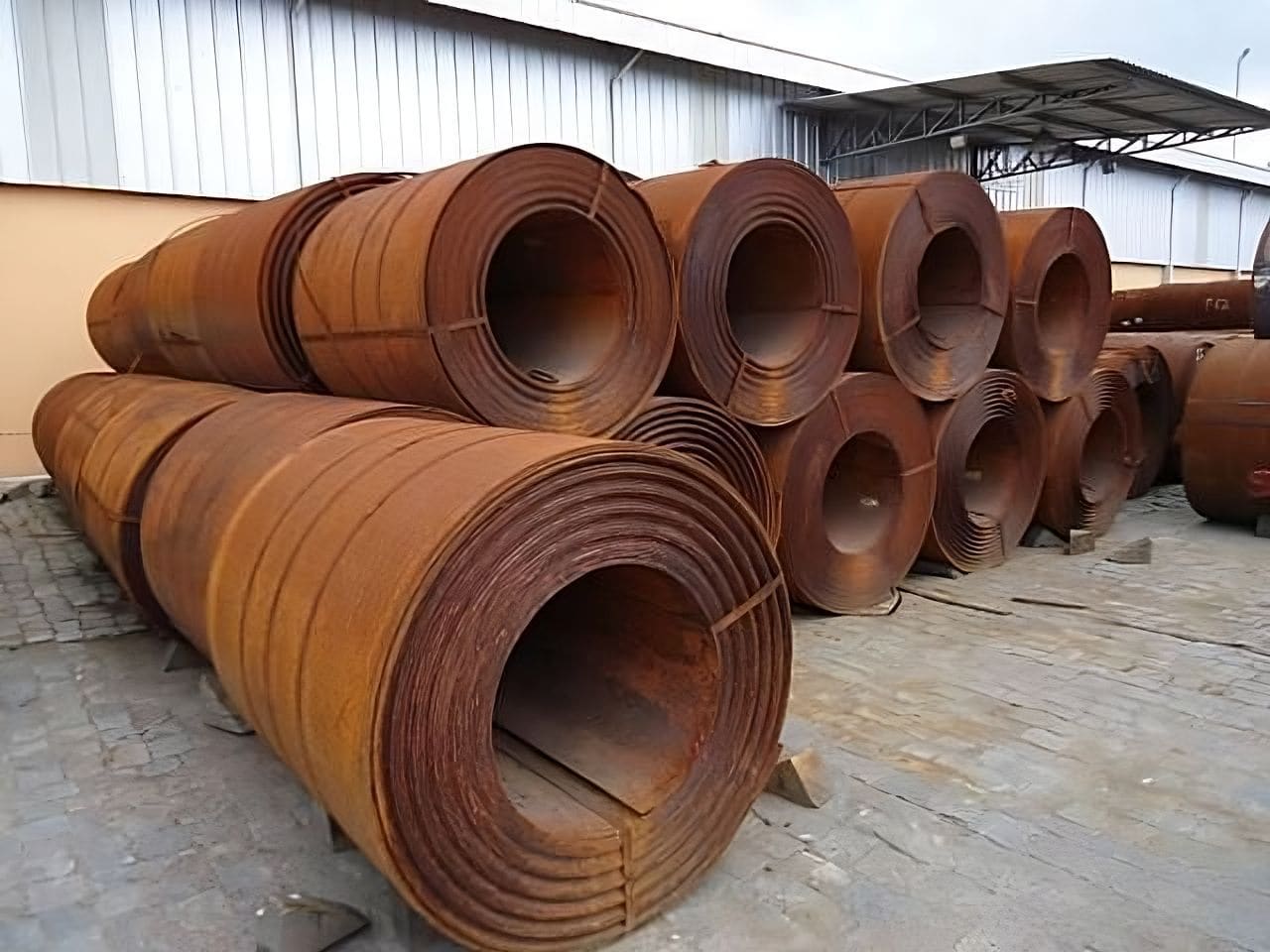
A good pretreatment system will create an initial layer of protection, slow down the corrosion process and significantly increase the durability of the coating.
4. Increased resistance in harsh environments
Metal products are often subject to work in the following environments:
- High humidity.
- Coastal.
- Acid rain.
- UV rays.
- Industrial chemicals.
If the paint is not supported by a proper pretreatment system, water and oxygen will quickly enter the metal substrate, causing rust and destroying the coating.
Conversely, when the surface is properly treated, corrosion resistance and outdoor durability are significantly improved.
5. Reduce the defect rate in production
For mass production lines, just one part with poor paint adhesion can also lead to:
- increased repair costs;
- the entire shipment must be repainted;
- delay in delivery;
- affecting the reputation with customers.
Therefore, in industrial paint standards such as ISO and ASTM, surface pretreatment is not an option, but a mandatory stage to ensure product quality.
Standard Metal Surface Treatment Procedures
Depending on the type of metal and technical requirements, the processing process may vary. However, most modern lines consist of two main groups of stages: mechanical processing and chemical processing.
Step 1. Mechanical Processing
This is the first step to eliminate mechanical defects on the surface and prepare the metal substrate for the next stage.
Common methods include:
- Grinding.
- Polishing.
- Spinning the barrel.
- Shot blasting.
- Sandblasting.
Purpose:
- Removes rust and oxides.
- Remove post-machining bavia.
- Increase the uniformity of the surface.
- Creates the right roughness to increase adhesion.
Step 2. Oil Removal
During mechanical processing, metals often adhere to cutting oils, preservative oils, or greases.
If not removed completely, these substances will interfere with the bond between the paint and the metal substrate.
Typically, the deoiling process is carried out with a chemical solution combined with heating to improve the cleaning efficiency.
Step 3. Rust removal and oxide removal
Metals after storage or transportation often appear a natural oxide layer.
At this stage, the surface is treated with an acidic solution with an appropriate concentration to:
- complete removal of the oxide layer;
- cleaning metal substrates;
- preparing for the process of creating a metabolic layer.
Step 4. Ultrasonic or electrochemical oil removal (as needed)
For parts with complex shapes or very high cleanliness requirements, businesses can apply:
- Ultrasonic Oil Removal: helps to clean crevices, small holes, and hard-to-reach surfaces.
- Electrochemical oil removal: completely removes the residual grease, creating an optimal clean surface for the next stages.
Step 5. Chemical Metabolism Layer Formation
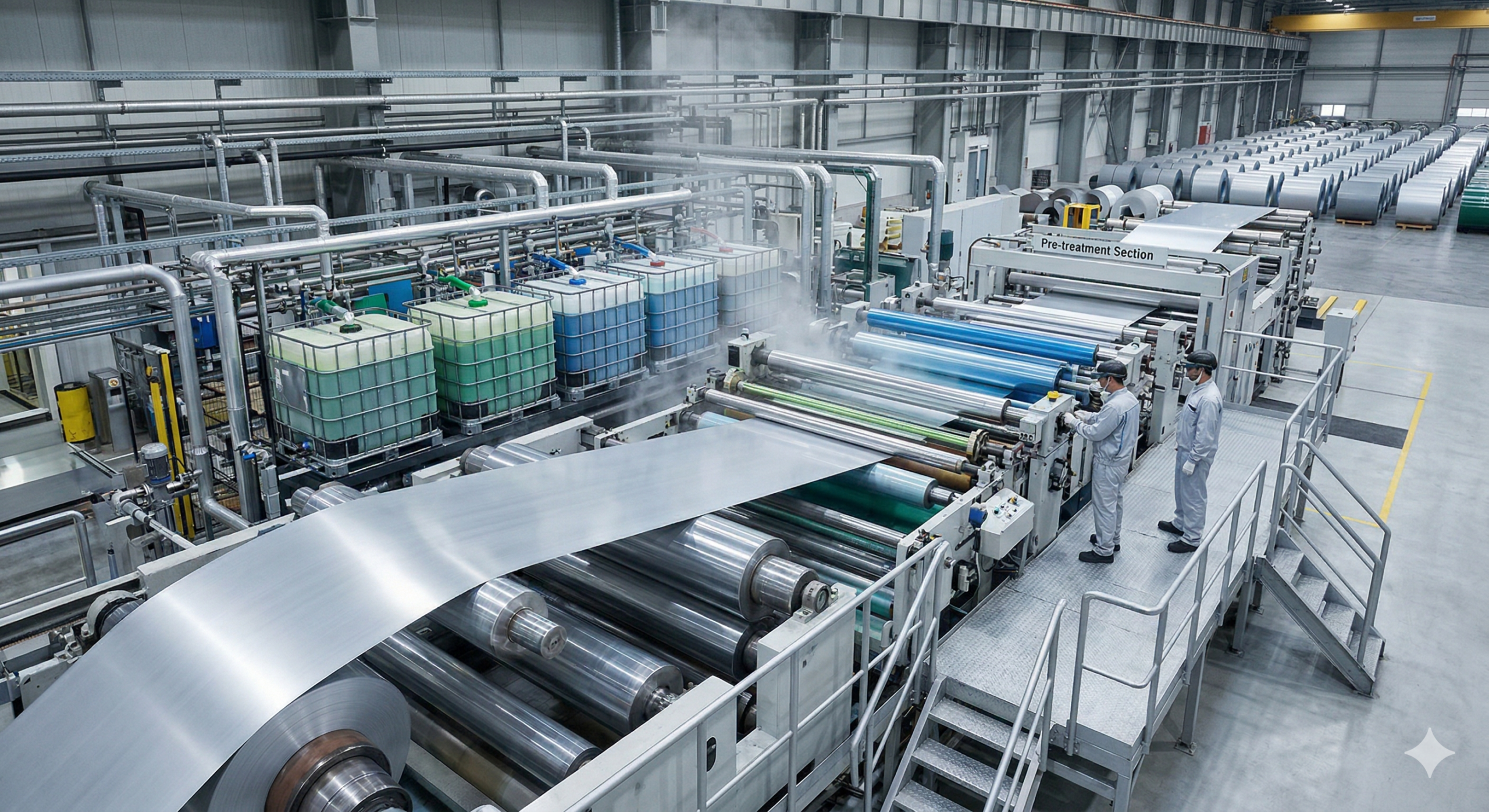
This is the most important step in the entire pretreatment process.
Popular technologies today include:
-
Nano Ceramic.
The metabolic layer helps:
- increased paint adhesion;
- improve corrosion resistance;
- improve outdoor durability;
- prolong the life of the product.
What are PrimeCoat® Pretreatments?
In the Coil Coating industry and industrial paint lines, the quality of the coating depends not only on the type of paint but also directly affected by the chemical system of metal pretreatment.
PrimeCoat® Pretreatments is a line of high-performance pretreatment chemicals developed by AD CCT – a member of AD International, specializing in providing metal surface treatment solutions to many roll sheet manufacturers around the world. This series is designed to meet the stringent requirements for paint adhesion, corrosion resistance, and outdoor durability.
Not only does PrimeCoat® help clean surfaces, but it also creates a stable chemical metabolism layer, which helps the paint layer bond closely with the metal substrate, thereby improving product quality and extending service life.
The Role of Metal Pretreatment Chemicals in Paint Lines
In modern manufacturing, users always expect metal products to have:
- Long service life.
- Durable paint color.
- High corrosion resistance.
- Good adhesion after machining.
- Ability to withstand harsh environments.
To meet these requirements, the pretreatment chemical system acts as the “bond” layer between the metal substrate and the paint layer.
A suitable pretreatment system will help:
✔ Increase the adhesion of the paint.
✔ Increased corrosion resistance.
✔ Reduces the risk of peeling after bending, stamping or forming.
✔ Limit corrosion under the paint film.
✔ Increase product life.
✔ Enhanced durability when used outdoors.
On the contrary, if the pretreatment stage is ignored or improperly performed, the paint is very easy to peel, blister or appear rust prematurely, directly affecting the quality and value of the product.
The Trend of Transition to Non-Chromium VI Pretreatment Technology
For many years, hexavalent Chromium-containing (Cr⁶⁺) chemical systems have been popularly used due to their effective corrosion resistance. However, this is a chemical that is subject to strict control due to its effects on human health and the environment.
The current trend is to switch to Chrome-Free or Chromium III (Cr³⁺) technologies to meet international standards such as:
- RoHS
- REACH
- ELV
- Requirements for green production and sustainable development.
PrimeCoat® is one of the cutting-edge solutions that meet this trend with many advantages:
- Does not contain Chromium VI.
- No rinsing is required.
- Reduce water consumption.
- Save operating costs.
- Environmentally friendly.
- Suitable for modern production lines.
PrimeCoat® Pretreatments
To meet the requirements of each type of metal substrate, PrimeCoat® has a wide range of specialized products.
PrimeCoat® A10x-Series
For aluminum.
Advantages:
- Chrome-Free technology.
- Increase paint adhesion.
- High corrosion resistance.
- Suitable for modern Coil Coating lines.
PrimeCoat® Z10x-Series
For:
- Galvanized Steel
- Cold corrugated iron
- Iron Zam
- Zinc Alloy
Advantages:
- High anti-corrosion performance.
- Meet international environmental standards.
- Supporting sustainable production.
- PrimeCoat® Z13x-Series
- Chromium III Technology.
Help:
-
Increased corrosion resistance.
-
Improve the durability of the paint layer.
-
Effectively replaces traditional Chromium VI technology.
- PrimeCoat® MM10x-Series
Chrome-Free Solution for Multimetal:
-
Cold rolled steel.
-
Galvanized steel.
-
Aluminum.
Advantages:
- Simplify the process.
- Reduce the number of chemicals used.
- Increase operational efficiency.
PrimeCoat® MM13x-Series
The Chromium III series is suitable for a wide variety of metal substrates, making it easy for businesses to standardize processes while ensuring high corrosion resistance and adhesion.
D.K Chemicals – Metal Pretreatment Solution Provider
As a unit operating in the field of metal surface treatment chemicals, D.K Chemicals provides advanced pretreatment solutions for many industries such as:
-
Coil Coating.
-
Metalworking.
-
Powder coating.
-
Steel structure.
-
Home appliances.
-
Automobiles and components.
-
Electrical – Electronics.
Not only providing products, D.K Chemicals also accompanies customers in:
- Survey and evaluation of production lines.
- Choose the right chemicals for each type of metal substrate.
- Optimize the pretreatment process.
- Reduce chemical and water consumption.
- Improve the anti-corrosion effect.
- Meet international technical and environmental standards.
With an experienced technical team and a high-quality product portfolio, D.K Chemicals aims to help businesses improve product quality, optimize operating costs and increase competitiveness in the market.
Frequently Asked Questions (FAQ)
1. What is surface pretreatment?
Surface pretreatment is the process of cleaning and creating chemical metabolism layers on metals before painting or coating surfaces to increase adhesion and corrosion resistance
2. Why does surface pretreatment determine the life of the paint?
Because this process helps to remove grease, rust and impurities, and creates a bonding layer between the metal and the paint, making the coating more durable and limiting peeling.
3. What are the steps of the surface pretreatment process?
Typically includes mechanical treatment, degreasing, rust removal, water washing, chemical metabolic layering, and drying before painting.
4. If there is no surface pretreatment, what happens?
The paint is easy to peel off, reduces adhesion, quickly appears rust and shortens the life of the product.
5. What metals are PrimeCoat® Pretreatments suitable for?
PrimeCoat® has product lines for cold-rolled steel, galvanized steel, zinc steel, aluminum and many other metal substrates.
6. Does PrimeCoat® contain Chromium VI?
Many PrimeCoat® series use Chrome-Free or Chromium III (Cr³⁺) technology, which meets environmental standards such as RoHS and REACH.
Related Articles
Why does galvanized steelstill rust white? Efficient Passivation Solutions for the Metal Industry
Metal cleaning and pretreatment
Galvanizing process and the trend of choosing modern passive chemical
Galvanizing chemicals and common “problems” of plating
You May Be Interested In
Where to provide reputable and quality surface treatment products?
Good Price Oil Removal Chemicals
Good Price Passivated Chemicals
Where to buy reputable hot-dip galvanized additives
Address to provide reputable white rust remedies?
Good Price Passivated Chemicals
Where to buy reputable hot-dip galvanized additives

D.K. Chemicals Co., Ltd.
Address: 50 Street No. 12, Cityland Park Hills Residential Area, Go Vap Ward, Ho Chi Minh City
Hotline: 0909678599
Email: de@dk-chemicals.vn