

In the context of the automotive, electronics, construction, and aerospace industries increasingly demanding materials with a long life and superior corrosion resistance, aluminum passivation is becoming one of the top surface treatment technologies of interest. Not only does it contribute to improving the durability of the product, but this process also meets the trend of green production and international environmental standards.
WHAT IS ALUMINUM PASSIVATION?
Aluminum Passivation is a chemical treatment process that creates a stable protective oxide film on a metal surface. This film acts as a “shield” that prevents the ingress of moisture, oxygen and corrosive agents from the external environment.
Thanks to this special protection, aluminum can maintain its mechanical strength, aesthetics and long service life even under harsh working conditions.
Besides corrosion resistance, the passivation process also helps:
- Increased adhesion of paint and subsequent coatings;
- Improve the durability of the product;
- Maintains electrical conductivity for some specialized engineering applications;
- Meet environmental requirements and international standards.
TWO POPULAR ALUMINUM PASSIVATION METHODS TODAY
-
Anodizing (Anodizing)
Anodizing is the electrolysis process that increases the thickness of the natural oxide layer on the surface of aluminum. In this process, the aluminum part acts as an anode in the electrolysis system.
This method helps:
- Increased corrosion resistance;
- Improved wear resistance;
- Creates good adhesion to paints and glues;
- Provides a highly aesthetically pleasing surface.
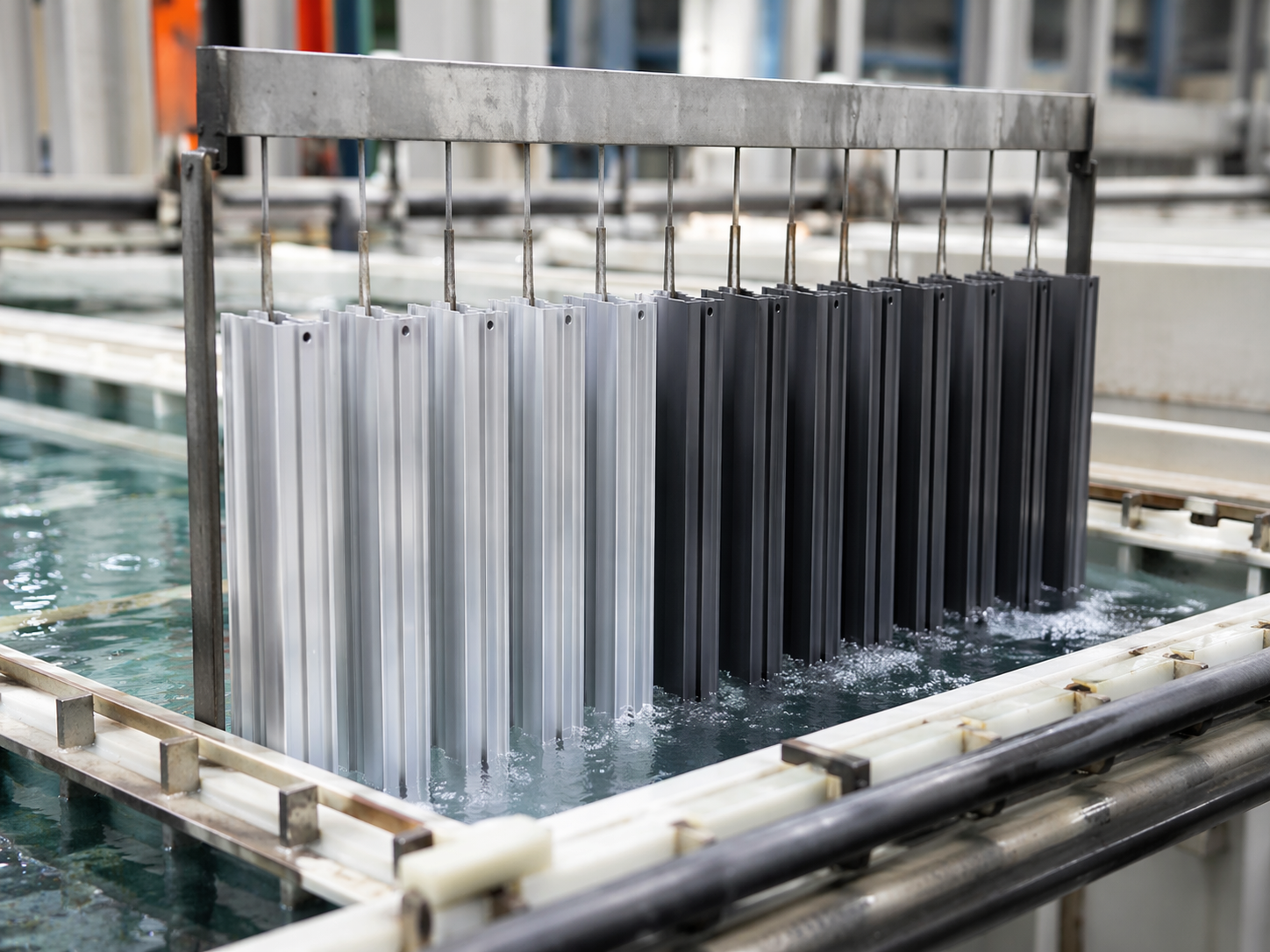
Thanks to these advantages, anodizing is widely applied in electronics, construction, aviation and high-end industry.
-
Chemical Passivation
This is a method of creating a thin metabolic layer on the surface of aluminum through specialized chemical solutions.
The resulting mulch is capable of:
- Enhanced corrosion resistance;
- Improve the adhesion of the coating;
- Retains the electrical conductivity of the surface;
- Suitable for many special technical requirements.
In the past, this technology mainly used hexavalent Chromium (Cr6+). However, due to its health and environmental impacts, many countries have restricted or banned the use of Cr6+ in accordance with the RoHS and REACH regulations.
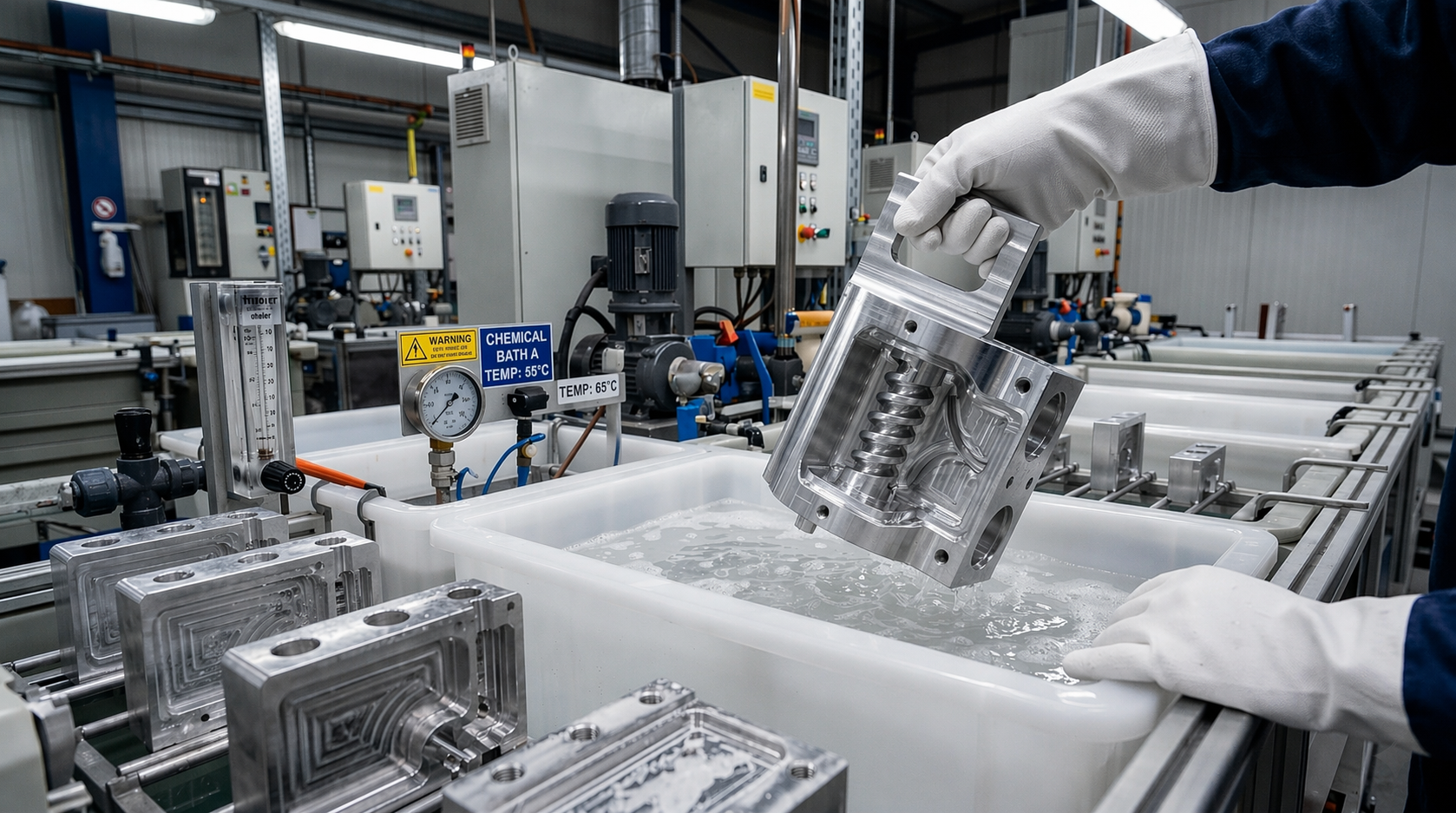
The current trend is to switch to trivalent chromium (Cr3+) technology, which is environmentally friendly and meets stringent international standards.
COMPARISON OF ANODIZING AND CHEMICAL PASSIVATION
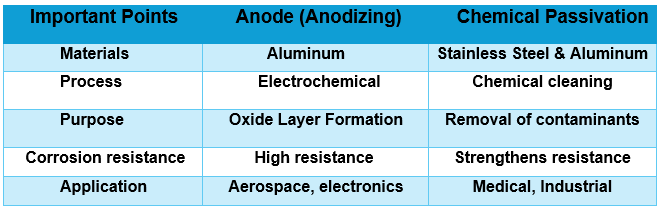 Each method has its own advantages and is selected according to the technical requirements of each production field.
BENEFITS OF ALUMINUM PASSIVATION PROCESS
Increased corrosion resistance
The protective oxide layer prevents oxidation and significantly reduces the impact of environmental factors such as moisture, chemicals or salt vapors.
Extend material life
Studies show that aluminum after being passivated can reduce the corrosion rate by about 70%, contributing to increasing the life and durability of the product.
Increased adhesion to coatings
The post-treatment surface creates ideal conditions for better adhesion of powder coatings, structural adhesives or organic coatings.
Maintains electrical conductivity
This is a prominent advantage of the chemical passivation method, which is especially important in the field of electronics and high technology.
Towards green manufacturing
The transition to Cr6+-free technology helps businesses meet environmental requirements and global sustainability trends.
DK CHEMICAL CO., LTD – A PROFESSIONAL ALUMINUM PASSIVATION SOLUTION PROVIDER
With the orientation of providing advanced surface treatment solutions, DK Chemical Co., Ltd. is currently distributing high-quality aluminum passivation chemical lines, meeting the needs of many industries such as:
- Automotive
- Aerospace
- Electronics
- Construction and architecture
- Precision metalworking
The solutions provided by DK aim to:
- Increase product life;
- Replacement of Chromium VI-containing technologies
- Meet strict international standards;
- Supporting businesses to transition to environmentally friendly production processes.
PRECOAT PRODUCT LINE – NEW GENERATION CHROMIUM III ALUMINUM PASSIVATION SOLUTION
Prominent in DK’s product portfolio is the PreCoat A32 series – a Chromium III (Cr3+) based passivation system.
Outstanding advantages of PreCoat A32:
✔ Does not contain toxic Chromium VI.
✔ Ceiling corrosion protection without additional coating.
✔ Easy integration into existing lines without major renovations.
✔ Ensures bonding strength with powder coatings and structural adhesives.
✔ Maintains high conductivity for electronic applications.
✔ Applied in high-tech industries such as:
- Automotive;
- Aerospace;
- Electronics;
- Architecture and construction.
Meet international standards
PreCoat A32 meets or exceeds the following standards:
- Qualicoat
- GSB
- MIL-DTL 81706B
- MIL-DTL 5541
In particular, the product has been independently tested by a research institute affiliated with the European Space Agency (ESA), showing that this is one of the promising Cr6+-free pretreatment solutions on the market today.
SOME FREQUENTLY ASKED QUESTIONS
What is aluminum passivation?
This is a process that creates a protective oxide film on the surface of aluminum to limit oxidation and corrosion, and improve the durability of the material.
What are the benefits of aluminum passivation?
This process helps:
- Effective corrosion resistance
- Extend product life
- Increased adhesion of paint
- Maintains electrical conductivity
- Meet modern environmental standards.
What methods of aluminum passivation are there?
Currently, the two most common methods include:
- Anodizing (Anodizing).
- Passivation by chemical metabolites.
Can Chromium III technology replace Chromium VI?
Yes. Cr³⁺ technology is currently considered an inevitable development trend in the aluminum surface treatment industry thanks to its high corrosion resistance and compliance with RoHS and REACH regulations on environmental protection.
In the development trend of modern materials and industry, aluminum passivation is not only a solution to improve corrosion resistance, but also an important step towards sustainable production. The shift from Chromium VI to Chromium III technology is opening up many new opportunities for businesses to meet international standards, while improving the value and longevity of aluminum products in the market.
⇒ See more articles about aluminum passivation here:
https://dk-metalsurfacetreatment.com/thu-dong-hoa-kim-loai-crom-3/
https://dk-metalsurfacetreatment.com/thu-dong-hoa-kim-loai/
⇒ See more metal passivation products here:
https://dk-metalsurfacetreatment.com/thu-dong-hoa-khong-chua-chrome-vi/
https://dk-metalsurfacetreatment.com/thu-dong-hoa-cho-nhom/
https://dk-metalsurfacetreatment.com/anod-hoa-nhom-anodizing-nhom/