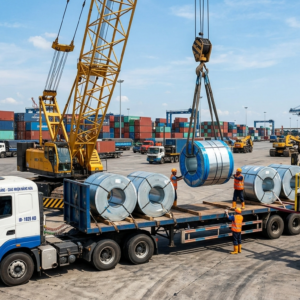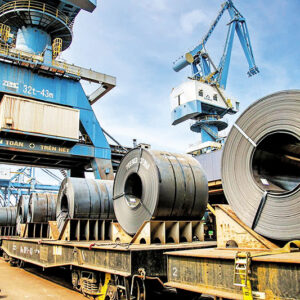


Entering 2026, the Vietnamese steel industry is facing a pivotal restructuring phase. Geopolitical shifts, trade protectionist policies, and international green standards are creating a challenging “equation” for the sustainable growth of domestic businesses.
- Vietnam’s Steel Industry in the First Four Months of 2026: A Race to Rebuild Market Share Amidst Global Turmoil
- Highlights of the Steel Industry in 2025 and Growth Drivers for 2026
- Vietnam’s Steel Industry in 2026: Facing Strategic “Pinches” and the Inevitable Transformation Roadmap
Multi-Layered Challenges Surround the Market
The steel industry is currently facing combined pressure from three sides: energy costs, technical barriers, and unfair competition.
- Carbon Barriers and Cost Pressures (CBAM): From January 1, 2026, when the EU’s Carbon Border Adjustment Mechanism (CBAM) officially comes into effect, Vietnamese steel will face significant carbon tariffs due to its current emission intensity being approximately 48% higher than the EU standard. This will directly reduce profit margins and competitiveness in the European market.
- Consequences of geopolitical conflict: The Iran conflict (2026) paralyzed the Strait of Hormuz – a vital global energy and logistics artery. As a result, shipping costs and “war risk” insurance premiums skyrocketed. In particular, the disruption of the supply of steel billets and iron ore from Iran (accounting for 3% of global production) created a supply shock, pushing raw material prices to new highs.
- Pressure from the “wave” of cheap steel: The domestic market continues to be threatened by the surplus of steel from China. The imposition of retaliatory tariffs of 25% on imported steel by major countries like the US has created a ripple effect, causing cheap steel to flood into the ASEAN region, including Vietnam, putting heavy pressure on the selling prices and market share of domestic manufacturers.
Opportunities in Challenges: The Game of Adaptation
Despite the volatile overall landscape, the market continues to present new opportunities for businesses with a strategic vision:
- Filtering and Elevating Positions: Challenges from CBAM and green standards act as a market “filter.” Pioneering businesses that transition to electric arc furnace (EAF) technology or utilize renewable energy will gain a significant advantage in entering high-end markets and leveraging FTA agreements.
- Market gap arising from tariff policies: The US imposition of high tariffs on traditional partners (Canada, South Korea, Mexico) inadvertently creates a more level playing field for Vietnamese steel. If rules of origin (ROO) are met, Vietnam’s export turnover to the US is projected to grow by over 20%.

The Vietnamese steel industry is facing a “forced evolution” in 2026.
Strategic Recommendations for Steel and Sheet Metal Businesses
Given the ever-changing market landscape in 2026, businesses need to implement a comprehensive set of solutions:
- Prioritizing the “greening” of production is no longer an option but a condition for survival. Businesses urgently need to invest in emission reduction technologies and improve their measurement, reporting, and verification (MRV) systems to adapt to international carbon emission transparency requirements.
- Diversify supply chains and markets: Avoid putting all your eggs in one basket. Businesses should proactively seek alternative sources of raw materials to reduce dependence on conflict zones, while expanding exports to markets with similar environmental standards or countries within FTAs.
- Proactive defense and risk management: Closely coordinate with relevant authorities to promptly respond to anti-dumping cases. In addition, strict adherence to rules of origin is key to avoiding legal risks in demanding markets such as the US and EU.
- Flexible financial management: In the context of fluctuating energy and logistics costs, optimizing operational processes and accessing green credit sources will help businesses maintain cash flow and ensure the capacity to reinvest in technology.
Conclusion: The Vietnamese steel industry in 2026 is facing a “forced evolution.” Only businesses that are decisive in green transformation and flexible in managing change can turn current barriers into springboards to reach international levels.
Learn More
1. Chemicals for the Coiled Steel Industry .
2. Pre-treatment Chemicals
3. Chemicals for Hot-Dip Galvanizing (HDG)
4. Specialized Information
| NEW ARTICLE |
DK-Chemicals: Metal surface pretreatment solutions for industry
DK-Chemicals provides chemical surface treatment solutions for metals serving the aluminum, galvanized sheet, color-coated steel, coil-coating, and related industrial applications.
With a focus on providing advanced, environmentally friendly technologies that meet modern production requirements, DK-Chemicals partners with customers in selecting suitable pre-treatment solutions, optimizing surface quality, and enhancing product durability after coating.
Contact DK Chemicals’ technical team today for detailed advice .
DK Chemical Company Limited
Address: 50 Street No. 12, Cityland Park Hills Residential Area, Go Vap Ward, Ho Chi Minh City
Hotline: 0909678599
Email: de@dk-chemicals.vn